Termite Risk in West Palm Beach's Historic Homes
If you own property in El Cid, Flamingo Park, Northwood, or Prospect Park, your home is dealing with a termite risk that newer West Palm Beach construction simply doesn't have. These neighborhoods carry some of the oldest wood-frame housing stock in Palm Beach County, and that age changes the entire termite conversation, from what's likely already there to how it should be treated.
What Makes West Palm Beach's Historic Districts Different
West Palm Beach maintains 18 locally-designated historic districts and 46 individually-designated historic sites, one of the largest concentrations of protected historic architecture in the county. Several key facts set these properties apart:
- Many homes in El Cid, Flamingo Park, and Northwood date to the 1920s and 1930s, built in Mediterranean Revival and Mission-style architecture
- Original framing in this era commonly used heart-pine and Dade County yellow pine, both of which remain structurally sound for a century, but were never treated with modern termite protection
- Properties are frequently built on raised foundations or pier-and-beam construction, creating direct wood-to-soil contact points that didn't exist in later slab construction
- Any soil treatments applied decades ago have long since expired, and many of these homes have never been professionally treated at all
None of this means these are lesser-built homes. It means they were built in an era before termite protection was standard, and nearly a century of Florida humidity has had time to work against that original wood.
Why Original Wood Framing is a Bigger Risk Than You Think
Newer West Palm Beach construction west of Military Trail typically uses concrete block stucco (CBS) with limited wood exposure. Historic district homes are the opposite: extensive original wood framing, wood trim, wood window frames, and in many cases, wood subflooring. That's simply more surface area and more direct entry points for both of the termite species active in this area:
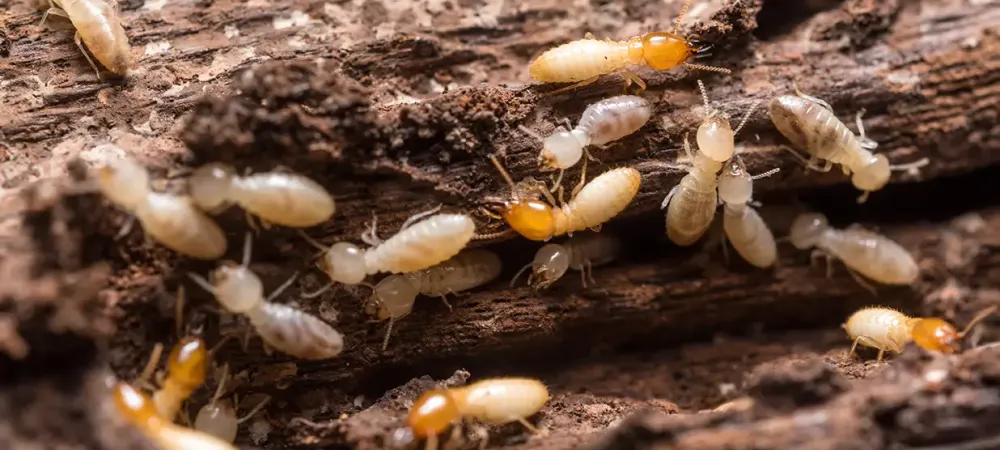
Subterranean Termites
Subterranean termites, including the more aggressive Formosan species, live in the soil and tunnel upward to reach structural wood. Raised foundations and pier-and-beam construction, common throughout El Cid and Northwood, create far more wood-to-soil contact points than a modern slab foundation does. Without an active soil barrier, and most of these homes don't have one, there's little standing between the colony and the framing above.
Drywood Termites
Drywood termites don't need soil contact at all. They establish directly inside exposed wood: attic framing, window casings, trim, and original subflooring are all fair game. This makes them harder to catch early in a historic home, since a colony can be active inside a wall cavity or window frame for years before any visible sign appears.
A home built in this era with no active soil barrier and a century of humidity exposure isn't a maybe. It's usually a matter of degree.
Warning Signs to Watch for in Older West Palm Beach Homes
Because these properties often have more hidden wood, from wall cavities to original subflooring, damage can progress further before it's visible. Watch for:
- Discarded wings near windows, light fixtures, or attic vents after a swarm
- Small piles of what looks like coarse sawdust or pellets near trim, window frames, or baseboards are a sign of drywood termite activity
- Mud tubes running along piers, crawl space foundations, or exterior walls
- Wood trim, window frames, or flooring that sounds hollow or feels soft when pressed
- Doors and windows that have become difficult to open are often a sign of structural wood swelling or damage
Because these homes tend to have more original wood in more places, a full inspection matters more here than in a newer CBS home, where wood exposure is limited to the roof structure.
Protecting a Historic Property Without Compromising Its Character
Termite treatment on a historic property isn't quite the same process as a standard treatment. Original wood trim, siding, and architectural detail are part of what makes these homes valuable, and the right approach protects the structure without unnecessary disruption to features that can't easily be replaced. That typically means:
- A full inspection to identify whether subterranean, drywood, or both species are active, since the treatment approach differs for each
- Soil treatment options for the subterranean threat that don't require excavation near the original foundation piers
- Spot treatment or localized options for isolated drywood activity, reserving full fumigation for infestations too widespread to treat locally
- A protection plan that accounts for the home's age going forward, not just the active infestation
Get a Clear Picture of Where Your Historic Property Stands
If you own property in one of West Palm Beach's historic districts, an inspection tells you what nearly a century of exposure has actually done, not just what you can see. At Price Termite & Pest Control, we understand the specific construction and termite pressure these older West Palm Beach neighborhoods carry. Schedule a termite inspection for your West Palm Beach historic home to find out where your property actually stands.