
How to Get Rid of German Cockroaches
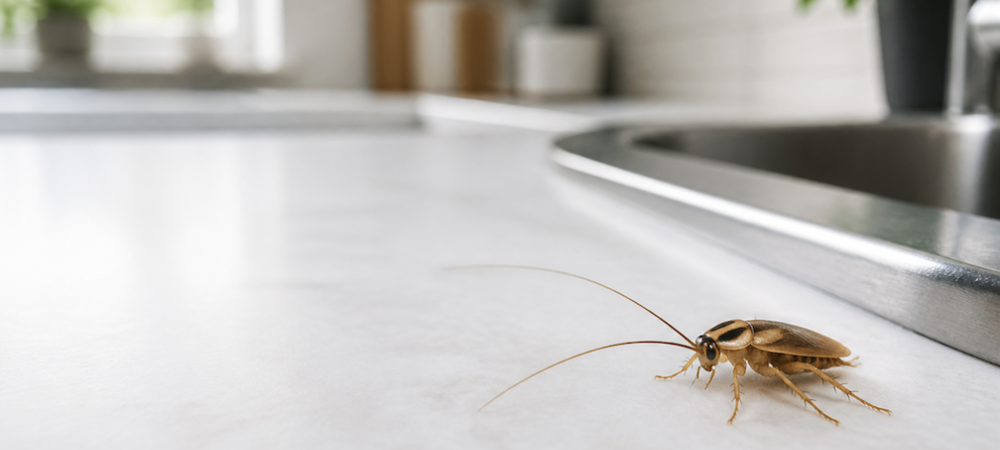
German cockroaches are the hardest roaches to get rid of in Florida homes because they live entirely indoors, breed year-round, and have built resistance to many common insecticides. What works is targeted gel bait placed in the cracks where they hide, paired with sanitation, sticky-trap monitoring, and a few weeks of follow-through. Bug bombs and broad sprays usually make the problem last longer, not shorter.
- Are German Cockroaches Harder to Get Rid Of Than Other Roaches?
- How to Tell German Cockroaches Apart From Other Florida Roaches
- What Causes German Cockroaches?
- Why Do I Suddenly Have German Roaches?
- How Long Does It Take to Get Rid of German Cockroaches?
- What Is the Most Effective Way to Get Rid of German Cockroaches?
- Do Bug Bombs Work on German Cockroaches?
- How to Get Rid of German Cockroaches Yourself
- How to Get Rid of Baby German Cockroaches
- How to Get Rid of German Cockroaches in an Apartment
- When to Call a Professional for German Cockroaches
- German Cockroach FAQ
Are German Cockroaches Harder to Get Rid Of Than Other Roaches?
German cockroaches are harder to eliminate than any other roach found in Florida homes, for three reasons: how fast they breed, where they hide, and how well they resist insecticides. University of Florida (UF/IFAS) entomologists report that a single female can produce 240 to 320 offspring in her lifetime, and the species can turn over three to six generations a year. German cockroaches also spend most of their lives tucked into cracks and crevices near food and water, where surface sprays don't reach.
Insecticide resistance is the third problem. UF/IFAS notes that resistance in German cockroaches has been reported for as long as people have been treating for them, and that if resistance genes are present in more than 1% of a population, a product can noticeably lose effectiveness within one generation. Some populations have also developed bait aversion, an inherited trait that makes roaches avoid the sugar used in many baits. A product that worked last year may not work in the same kitchen today.
The large roaches many Floridians call palmetto bugs are a different situation. Those roaches live outdoors in mulch, leaf litter, and palm trees and wander inside. German cockroaches are already living, feeding, and breeding indoors.
How to Tell German Cockroaches Apart From Other Florida Roaches
German cockroaches are small (1/2 to 5/8 inch), light brown to tan, with two dark stripes on the shield behind the head. Females often carry a yellowish-brown egg case at the tip of the abdomen. Nymphs (baby roaches) are darker and wingless, with two dark stripes running along a lighter tan stripe on their backs.
The Asian cockroach is the look-alike that confuses people in Florida. UF/IFAS describes the Asian cockroach as nearly identical to the German cockroach, except that it flies and is attracted to lights. Asian cockroaches often fly to porch lights and find their way inside, but they survive poorly indoors.
| German cockroach | Asian cockroach | American cockroach (palmetto bug) | |
|---|---|---|---|
| Size | 1/2 to 5/8 inch | About 5/8 inch | About 1 1/2 inches |
| Look | Tan with two dark stripes behind the head | Nearly identical to German | Large, reddish brown |
| Where it lives | Indoors only | Outdoors, flies to lights | Outdoors, wanders inside |
| What one indoors usually means | An active, breeding infestation | A stray from outside | A stray from outside |
- German cockroaches breed fast, and one female can produce 240 to 320 offspring in her lifetime.
- German cockroaches hide in cracks near food and water, out of reach of surface sprays.
- Insecticide resistance and bait aversion mean a product that worked before can stop working.
- A small striped roach flying to a porch light is likely an Asian cockroach, an outdoor species.
What Causes German Cockroaches?
German cockroach infestations start when roaches are carried into a home and grow when they find food, water, and places to hide. UF/IFAS calls these three needs the survival triangle. Kitchens and bathrooms supply all three: crumbs and grease, leaky faucets and moisture around refrigerators and ice makers, and warm gaps behind appliances.
Cardboard is a German cockroach favorite. UF/IFAS notes that German cockroaches thrive in cardboard and recommends plastic bins for anything stored longer than three to six months. Stacks of delivery boxes, paper grocery bags, and cluttered cabinets give a small population room to grow.
A clean home can still get German cockroaches. Cleanliness doesn't stop roaches from arriving, but crumbs, moisture, and clutter decide how quickly a few roaches turn into hundreds.
Why Do I Suddenly Have German Roaches?
A sudden German cockroach problem almost always traces back to something or someone carrying them inside. UF/IFAS's German cockroach management guide states plainly that German cockroaches do not enter buildings from outdoors. They spread entirely through people, riding in on grocery bags, cardboard boxes, used appliances and furniture, and even backpacks and purses.
In apartments and condos, German cockroaches often come from a neighboring unit. Shared walls, plumbing lines, and gaps around pipes and electrical panels give roaches a path from one home to the next.
A "sudden" infestation has usually been growing for a while. German cockroaches hide during the day, so a population can build for weeks before anyone notices. According to UF/IFAS, seeing German cockroaches out in the open during daytime means the population is likely large.
- German cockroaches don't come in from outdoors. People carry them in on boxes, bags, appliances, and belongings.
- Food, water, and hiding spots decide how fast a few German cockroaches become an infestation.
- Cardboard gives German cockroaches an ideal place to hide and breed.
- Seeing German cockroaches during the day usually means the population is already large.
How Long Does It Take to Get Rid of German Cockroaches?
Getting rid of German cockroaches usually takes several weeks, and heavy infestations can take a few months. The timeline comes down to biology. According to UF/IFAS research on the German cockroach life cycle, a female carries her egg case for about three weeks until it's ready to hatch, and the eggs inside are shielded from most treatments. Each egg case holds 30 to 40 eggs, and nymphs take about 60 days to reach adulthood at room temperature.
New German cockroaches can keep appearing after treatment starts because protected eggs are still hatching. UF/IFAS guidance calls for refreshing bait every one to two weeks and continuing until monitoring traps catch zero roaches, with no nymphs or egg cases found. A small, recent introduction clears faster. A large population with roaches visible during the day takes longer and usually needs several methods at once.
- Expect German cockroach treatment to take several weeks, and longer for heavy infestations.
- Egg cases shield developing roaches, so new nymphs can appear after treatment starts.
- Treatment is done when traps catch zero roaches, with no nymphs or egg cases found.
What Is the Most Effective Way to Get Rid of German Cockroaches?
The most effective way to get rid of German cockroaches is gel bait placed directly in their hiding spots, combined with an insect growth regulator (IGR), sanitation, and sticky-trap monitoring. University of Florida extension guidance lists baits, IGRs, and HEPA vacuums as the most effective treatment options for German cockroaches.
Gel baits outperform sprays because of how German cockroaches live. Roaches that eat bait pass it to others through their droppings and their bodies, which other roaches eat. That matters because the youngest nymphs don't leave their hiding spots to feed. They live off the droppings of older roaches, so bait reaches them and sprays don't.
Insect growth regulators close another gap. Females carrying egg cases eat and forage much less, so they're less likely to find bait. UF/IFAS explains that IGRs keep nymphs from maturing into breeding adults and can cause females to drop egg cases early, which sends them back out to feed.
Rotating products keeps German cockroach treatment working. UF/IFAS recommends switching to a bait with an active ingredient from a different insecticide class at least monthly when repeat treatments are needed. Rotation slows resistance and works around bait aversion.
Do Bug Bombs Work on German Cockroaches?
Bug bombs do not work on German cockroaches. UF/IFAS describes fogging as generally ineffective. The fog settles on open floors and countertops, while German cockroaches stay inside cabinets, wall voids, and the warm spaces behind appliances.
Bug bombs and sprays can also make German cockroaches harder to get rid of. Many of these products repel roaches, and UF/IFAS warns that using a repellent product near bait contaminates the bait so roaches won't eat it. A quick spray of store-bought roach killer around bait placements can undo weeks of progress.
- Gel bait in hiding spots, IGRs, sanitation, and monitoring work better together than any single method.
- Bait spreads through droppings and bodies, reaching young nymphs that sprays miss.
- Rotate to a bait from a different insecticide class at least monthly when repeat treatments are needed.
- Bug bombs don't work on German cockroaches, and repellent sprays can ruin bait placements.
How to Get Rid of German Cockroaches Yourself
DIY German cockroach control can work on a small, recent infestation if it's done consistently. Follow these steps:
- 1Confirm the species. Look for small, tan roaches with two dark stripes behind the head, mostly in the kitchen and bathroom.
- 2Set sticky traps. Place them along walls, in corners, under sinks, and behind the refrigerator and stove. Date each trap. Traps show where roaches are concentrated and whether treatment is working.
- 3Cut off food, water, and hiding spots. Wipe up spills right away, store food in sealed containers, take out kitchen trash nightly, fix leaks, and get rid of cardboard.
- 4Vacuum visible roaches. A vacuum with a HEPA filter removes roaches and the allergens they leave behind.
- 5Apply gel bait in small dabs. Put bait in cracks and crevices near trap activity, following the label. Small, spread-out placements work better than one large line.
- 6Stop spraying. Keep sprays and strong cleaners away from bait so roaches will still eat it.
- 7Refresh bait every one to two weeks. Check traps each time. If counts aren't dropping after a few weeks, switch to a bait with a different active ingredient.
- 8Keep going until traps stay empty. Stop only when traps catch no roaches and no nymphs or egg cases turn up.
DIY treatment works best when German cockroaches are caught early. If roaches are showing up in multiple rooms or during the day, store-bought products alone are unlikely to keep up.
How to Get Rid of Baby German Cockroaches
Getting rid of baby German cockroaches takes the same bait-based approach as adults, with more patience. Nymphs are a sign of an established, breeding population. UF/IFAS monitoring guidance notes that finding several life stages on a trap indicates an established infestation, and that a few very young nymphs usually mean their hiding spot is within 5 to 10 feet of the trap.
Baby German cockroaches are hard to reach directly. The youngest nymphs stay hidden and feed on the droppings of older roaches, so bait works on them indirectly once adults eat it. An IGR keeps surviving nymphs from growing into breeding adults. Expect to see some nymphs for a few weeks as protected egg cases hatch. Fewer nymphs on the traps each week is the sign treatment is working.
How to Get Rid of German Cockroaches in an Apartment
German cockroach treatment in an apartment works best when neighboring units are treated at the same time. Roaches travel between units through shared walls, plumbing, and gaps around pipes and electrical boxes, so roaches from an untreated unit can keep moving back in.
Steps that help in an apartment or condo:
- Tell your property manager early. Check your lease for who handles pest control, and share what you're seeing, including trap counts.
- Seal gaps you can reach. Caulk around pipes under sinks and gaps around wall-mounted fixtures to cut off travel routes.
- Follow the DIY steps inside your unit. Traps, sanitation, and gel bait still matter even when the building is being treated.
- Skip the bug bombs. Foggers don't reach German cockroaches, and the residue lands on surfaces you use every day.
- DIY German cockroach control works on small, recent infestations caught early.
- Dated sticky traps show where roaches are and whether treatment is working.
- Baby German cockroaches mean an active breeding population. The bait approach is the same, with more patience.
- In apartments, treating neighboring units at the same time gives treatment a much better chance.
When to Call a Professional for German Cockroaches
Call a professional for German cockroaches when roaches show up during the day, when several weeks of DIY baiting haven't lowered trap counts, when roaches are in more than one room, or when you live in a multi-unit building. Professional help is also worth it when someone in the home has asthma. UF/IFAS reports that German cockroaches produce at least a dozen distinct allergens that are potent asthma triggers.
| DIY treatment | Professional treatment | |
|---|---|---|
| Good fit for | Small, recent introductions | Established or spreading infestations |
| Products | Retail gel baits and sticky traps | Professional baits, IGRs, and HEPA vacuums |
| Handling resistance | Hard to know which active ingredient to switch to | Baits rotated across insecticide classes |
| Follow-up | You track traps and re-bait | Repeat visits until activity stops |
Price Termite & Pest Control handles German cockroaches as part of our pest control service.
- Call a professional if German cockroaches appear during the day, spread to multiple rooms, or survive several weeks of DIY baiting.
- Multi-unit buildings and homes where someone has asthma are good reasons to bring in help early.
- Professional treatment can rotate baits across insecticide classes to work around resistance.
German Cockroach FAQ
Can German cockroaches live outside in Florida?
German cockroaches do not live outdoors, even in Florida's heat and humidity. UF/IFAS notes they live only in association with people and do not enter buildings from outside. A small striped roach flying to your porch light is more likely an Asian cockroach.
Do German cockroaches mean my home is dirty?
German cockroaches do not mean a home is dirty. They arrive on grocery bags, boxes, used appliances, and belongings, so any home can get them. Food, moisture, and clutter affect how fast a population grows once they're inside.
Are German cockroaches harmful?
German cockroaches are a health concern, mainly because of allergens. UF/IFAS reports they produce at least a dozen distinct allergens that can trigger asthma, and researchers continue to study their role in spreading germs.
Will German cockroaches go away on their own?
German cockroaches will not go away on their own. With steady access to food, water, and shelter indoors, a single egg case can add 30 to 40 roaches, and the population keeps growing until it's treated.
Dealing with German cockroaches at your place, or not sure which roach you're looking at? Call Price Termite & Pest Control at 321-632-4171 and we'll help you figure out the right next step.
Call 321-632-4171Sources
- University of Florida IFAS Extension, Assessment-Based Pest Management of German Cockroaches (ENY989)
- University of Florida IFAS Extension, The German Cockroach (IN028)
- University of Florida IFAS Featured Creatures, German Cockroach, Blattella germanica (EENY-002)
- University of Florida IFAS Extension, Cockroaches and Their Management (ENY-214)