
About Fleas
What Are Fleas?
Fleas are small, wingless insects that feed on the blood of pets and, when numbers get high enough, people too. They don't fly, but their back legs let them jump remarkable distances relative to their size, which is how they move from host to host. Florida's warm, humid climate lets fleas breed year-round instead of dying off in winter the way they might farther north, which is part of why flea problems here tend to be more persistent.
Identification
Adult fleas are reddish-brown, flattened from side to side rather than top to bottom, which helps them move quickly through fur. They're small enough to be easy to miss on a pet's coat until an infestation is well underway, and they move fast, which makes them harder to spot than other pests.
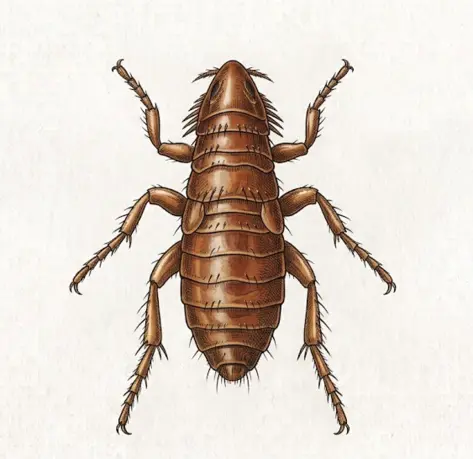
Often Confused With Ticks
Fleas and ticks both show up on pets and both mean an outdoor exposure of some kind, but they're very different pests with different treatment approaches. The clearest tell is movement: fleas jump and move fast, while ticks stay put once attached and feed slowly over days.
Small, fast-moving, jumps, flattened side to side, doesn't stay attached to skin
Larger, slow-moving, attaches and stays embedded in skin while feeding
Signs of an Infestation
Fleas are usually noticed through their effect on pets before they're spotted directly.
Habitat and Behavior
Fleas spend most of their life cycle off the host, not on it. Eggs fall from a pet's fur into carpet, bedding, and cracks in flooring, then develop through larval and pupal stages hidden in the environment before emerging as adults ready to jump onto a host. That's why treating just the pet, without addressing carpets, bedding, and the yard, usually isn't enough to fully solve a flea problem.
Why Florida Yards Stay Flea-Friendly
Shaded, moist areas of a yard, especially under porches, near fences, and anywhere pets rest outdoors, give flea eggs and larvae the humidity they need to survive. Combined with Florida's mild winters, outdoor flea populations rarely get a hard reset the way they might in colder climates.
Risks
For pets, flea bites can cause intense itching and, in some animals, an allergic skin reaction that leads to hair loss and secondary infection from scratching. Fleas can also transmit tapeworms if a pet swallows an infected flea while grooming. For people, flea bites are itchy and irritating, typically appearing in clusters around the ankles, and heavy infestations can make a home genuinely uncomfortable to live in until they're resolved.
Prevention Tips
When to Call a Professional
Flea treatments that only target the pet or the visible adults in the carpet tend to fall short, because eggs, larvae, and pupae hidden in carpet fibers and the yard can keep the cycle going for weeks. A treatment plan that addresses the pet, the home, and the yard together breaks the cycle instead of just knocking back what's visible.
Time to Call in Help If:
Pet-focused treatment alone hasn't resolved the problem, people in the home are getting bitten, or fleas keep reappearing a few weeks after treatment. That pattern usually means the eggs and larvae in the environment were never fully addressed.
Flea Control Near You
Price Termite & Pest Control treats flea infestations across Melbourne, West Palm Beach, and Fort Lauderdale.