
About Flies
What Are Flies?
Flies are fast-breeding insects drawn to food waste, moisture, and decaying organic matter. The most common types found around homes are house flies, fruit flies, and drain flies, each with a different breeding source and a different fix. Warm weather speeds up their life cycle considerably, which is why fly problems tend to escalate quickly once a breeding site is established.
Identification
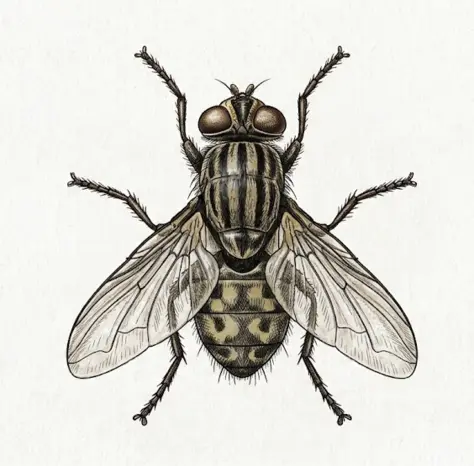
House flies are gray with four dark stripes on the thorax and a single pair of wings. Fruit flies are much smaller, tan or brown, with noticeably red eyes, and tend to hover around ripening produce or drains. Drain flies are fuzzy and moth-like in appearance and are usually found resting on walls near sinks or floor drains rather than flying much at all.
Which Fly Am I Dealing With?
Treatment depends entirely on which fly you have, since each one breeds in a different spot. Fruit flies almost always trace back to ripening produce or a dirty drain, while house flies usually point to garbage or pet waste nearby.
Small, tan, red eyes, hovers near produce, drains, or trash bins
Larger, gray with dark stripes, drawn to garbage, pet waste, and food left out
Signs of an Infestation
A few flies drifting in through an open door is normal. A pattern that keeps coming back usually points to an active breeding site somewhere close by.
Habitat and Behavior
Flies breed anywhere organic matter is decaying: garbage cans, compost, pet waste, drains coated with grime, and produce left out too long. A female house fly can lay several hundred eggs in her lifetime, and in warm conditions those eggs can become breeding adults within a week, which is why a fly problem can go from minor to widespread fast if the source isn't addressed.
Why Drains Are an Overlooked Source
Drain flies breed in the thin layer of organic film that builds up inside sink and floor drains, not in standing water itself. That's why spraying the room rarely helps. The fix has to target the drain, not just the flies you can see.
Risks
Flies don't bite, but they pick up bacteria from garbage, drains, and waste, then land on countertops, dishes, and food. That makes them a real contamination risk in kitchens, not just a nuisance. In larger numbers, they can also spread bacteria linked to food-borne illness, which is part of why commercial kitchens treat fly activity as more than cosmetic.
Prevention Tips
When to Call a Professional
Fly traps and sprays can thin out the adults you see, but they don't touch the breeding site, which means the problem keeps returning until that source is found and treated. Drain and sewer-related fly issues in particular are easy to miss without the right inspection.
Time to Call in Help If:
Flies keep coming back after cleaning obvious sources, you're seeing larvae and can't locate the breeding site, or activity is concentrated in a kitchen or food-prep area. A professional inspection finds the source instead of just treating the symptoms.
Fly Control Near You
Price Termite & Pest Control treats fly infestations across Melbourne, West Palm Beach, and Fort Lauderdale.