
About Mosquitoes
What Are Mosquitoes?
Mosquitoes are small flying insects, and only females bite, since they need a blood meal to develop eggs. Florida's warm, humid climate and heavy rainfall make it one of the most mosquito-active states in the country, with dozens of species present depending on the region and the season. Some are aggressive daytime biters close to the house, while others are more active at dusk and dawn near standing water.
Identification
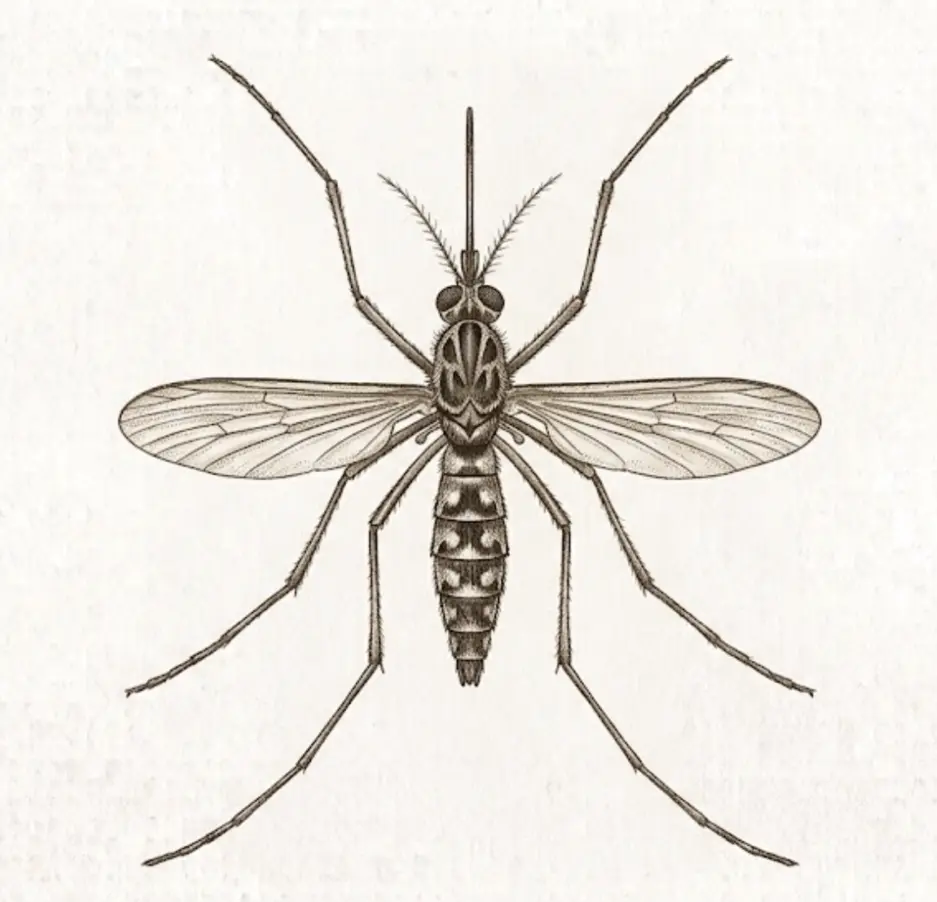
Mosquitoes are slender, long-legged insects with a distinct narrow proboscis used for feeding. Coloring varies by species, from plain brownish-gray to the black-and-white striped pattern of Aedes mosquitoes, which are common around homes and known for biting during the day rather than only at dusk.
Which Mosquito Is Biting You?
When you're getting bitten is a real clue. Daytime bites close to the house usually point to Aedes mosquitoes breeding in small containers nearby, while dusk and dawn bites more often trace back to Culex mosquitoes breeding in larger, standing water sources.
Black and white striped, bites during the day, breeds in small containers close to the home
Plain brown, most active at dusk and dawn, breeds in larger standing water and ditches
Signs of Activity
Mosquito pressure tends to build gradually as breeding sites go unaddressed, especially during Florida's rainy season.
Habitat and Behavior
Mosquitoes only need a small amount of standing water to breed, sometimes as little as a bottle cap's worth for container-breeding species. Common sources around Florida homes include clogged gutters, plant saucers, bird baths, old tires, tarps, and drainage areas. Florida's frequent rain keeps these sources replenished, which is why mosquito pressure rarely lets up for long, even between storms.
The Backyard Source Most People Miss
Bromeliads, a popular landscaping plant across Florida, naturally hold small pools of water in the base of their leaves, which makes them one of the most overlooked mosquito breeding sites in a typical yard. Flushing them out regularly makes a real difference.
Risks
Beyond the itching, mosquitoes are the main way several serious diseases spread in Florida, including West Nile virus and Eastern Equine Encephalitis, with local health departments actively monitoring for these and other mosquito-borne illnesses each season. Repeated bites also carry a heartworm risk for pets that aren't on year-round prevention. In a state with Florida's mosquito pressure, control is as much a health precaution as it is about comfort.
Prevention Tips
When to Call a Professional
Eliminating obvious standing water helps, but it rarely solves mosquito pressure on its own, especially in neighborhoods near canals, retention ponds, or dense landscaping where breeding sources are hard to fully control. Recurring barrier treatments target adult mosquitoes and breeding sites together, which makes a bigger difference than source reduction alone during peak season.
Time to Call in Help If:
Bites are a daily problem despite removing standing water, outdoor spaces like a patio or lanai are unusable during peak hours, or the property is near a known mosquito source like a canal or retention pond. A recurring treatment plan keeps pressure down instead of just reacting to it.
Mosquito Control Near You
Price Termite & Pest Control treats mosquito activity across Melbourne, West Palm Beach, and Fort Lauderdale.