About Termites
What Are Termites?
Termites are wood-eating insects that live in colonies and cause damage that often goes unnoticed until it's extensive. Florida sees two main types: subterranean termites, which live in the soil and travel into homes through mud tubes, and drywood termites, which live directly inside dry wood without any soil contact at all. Both are active year-round in Florida's climate, and both can cause serious structural damage long before a homeowner notices anything is wrong.
Identification
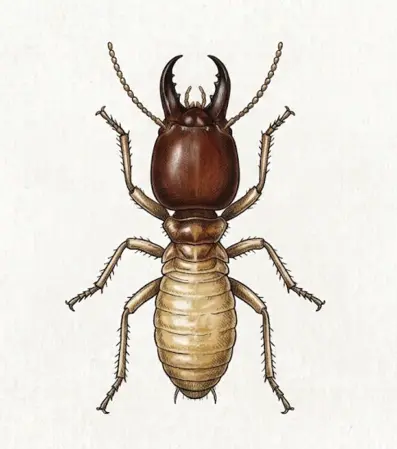
Worker termites, the ones most likely to be found in damaged wood, are small, soft-bodied, and pale cream to white in color. Swarmers, the reproductive termites that fly off to start new colonies, are dark brown to black with two pairs of wings of equal length. Termite swarms tend to happen in spring, often right after rain, and are one of the clearest early signs of a nearby colony.
Often Confused With Flying Ants
Termite swarmers and flying ants get mixed up constantly, especially during Florida's spring swarm season. Telling them apart matters: one usually means a passing nuisance, the other can mean an active colony already inside the structure.
Straight, thick waist with no pinch; straight antennae; two pairs of equal-length wings
Pinched, narrow waist; bent antennae; two pairs of unequal-length wings
Signs of an Infestation
Termite damage is often hidden inside walls or under floors, so most infestations are caught by indirect signs rather than seeing the insects themselves.
Habitat and Behavior
Subterranean termites live in the soil and need consistent contact with moisture, which is why they build mud tubes to travel above ground while staying protected from light and dry air. Drywood termites work differently. They live entirely inside the wood they eat, without any soil contact, which means they can turn up in attic framing, furniture, and structural wood far from ground level.
Why Florida Homes Are at Higher Risk
Florida's warm, humid climate keeps termite colonies active all year instead of slowing down in cooler months. Homes with wood-to-soil contact, mulch piled against the foundation, or moisture issues around the slab tend to see pressure from subterranean termites first, while older homes and wood furniture are more common entry points for drywood termites.
Risks
Termites don't bite or sting, and they aren't a health risk to people. The risk is entirely structural. A colony can feed on wood framing, subflooring, and support beams for years before the damage becomes visible, and by the time it's obvious, repairs are often extensive. Termite damage typically isn't covered by standard homeowners insurance, which makes early detection the difference between a manageable treatment and a major repair bill.
Prevention Tips
When to Call a Professional
Termites are one of the few pests where DIY treatment almost never works. Store-bought products might kill the termites they directly contact, but they don't reach the rest of the colony, and a subterranean colony can rebuild and keep feeding without anyone noticing. Professional treatment is built around eliminating the colony, not just the termites visible at the surface.
Time to Call in Help If:
You've spotted mud tubes, discarded wings, or frass, wood sounds hollow when tapped, or it's simply been a year or more since your last professional inspection. With termites, catching a problem early is almost always cheaper than waiting.
Termite Control Near You
Price Termite & Pest Control treats termite infestations across Melbourne, West Palm Beach, and Fort Lauderdale.