About Wasps
What Are Wasps?
Wasps are stinging insects that build nests around homes, sheds, and yards. Florida's most common types are paper wasps, yellow jackets, and mud daubers, each building a different kind of nest and behaving differently when disturbed. Some species are social and defend their nest aggressively in numbers, while others, like mud daubers, are solitary and rarely sting unless handled directly.
Identification
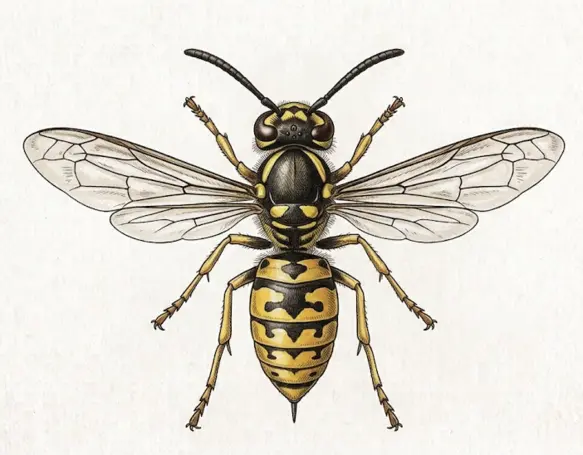
Paper wasps are slender with long legs that dangle in flight and build open, umbrella-shaped nests. Yellow jackets are shorter and stockier with bold yellow and black banding, and often nest in the ground or inside wall voids. Mud daubers are narrow-bodied with a distinctly thin, thread-like waist and build tube-shaped mud nests on walls, eaves, and in garages.
Often Confused With Bees
Wasps and bees get lumped together constantly, but they behave very differently and call for different approaches. A bee sting is a one-time defense, while a wasp can sting repeatedly, which changes how seriously a nest near a doorway or patio should be taken.
Smooth body, narrow pinched waist, can sting multiple times, more aggressive when nest is threatened
Fuzzy body, rounder shape, stings once and dies, generally less aggressive away from the hive
Signs of a Nest
Wasp nests are often easy to miss until activity picks up, especially in eaves, sheds, and other spots people don't check often.
Habitat and Behavior
Wasps build nests wherever they find shelter and easy access to food. Eaves, soffits, attic vents, sheds, and playground equipment are all common nesting spots around Florida homes. Yellow jackets often nest underground or inside wall cavities, which makes their nests harder to spot until activity is already heavy.
Why Nests Grow Fast in Florida
Florida's long warm season gives wasp colonies more time to grow before winter slows them down elsewhere. A nest that starts small in spring can carry dozens or even hundreds of workers by late summer and early fall, which is when most sting incidents happen.
Risks
A wasp sting causes sharp, immediate pain and swelling, and unlike bees, a single wasp can sting multiple times in one encounter. For people with a sting allergy, a wasp sting can trigger a serious allergic reaction, including anaphylaxis, which makes nests near doors, patios, and play areas a real safety concern rather than just a nuisance. Social species like yellow jackets will also defend a threatened nest in numbers, which is what leads to multiple-sting incidents.
Prevention Tips
When to Call a Professional
Removing a wasp nest without the right equipment is one of the more common ways people get stung multiple times. A disturbed nest triggers a defensive response from the whole colony, not just the wasp closest to the disturbance, and nests hidden in wall voids or underground are harder to fully remove than they look.
Time to Call in Help If:
A nest is near a doorway, patio, or play area, anyone in the household has a sting allergy, or the nest is in a wall void, attic, or underground where full removal is hard to confirm. Professional treatment removes the nest safely without repeated exposure.
Wasp Control Near You
Price Termite & Pest Control treats wasp nests across Melbourne, West Palm Beach, and Fort Lauderdale.